
There is a question people like to ask quietly, sometimes defensively, sometimes dismissively. What is the point of literature?
It is often framed as an indulgence, a soft subject in a world that prizes speed, numbers and outcomes that can be measured neatly on a spreadsheet. Literature is treated as something you outgrow, something you leave behind once school is over. Yet the truth is that literature, when taught well, does not prepare you for exams. It prepares you for life.
I know this because I was taught by Mrs Naomi Adonis-Woodsley.
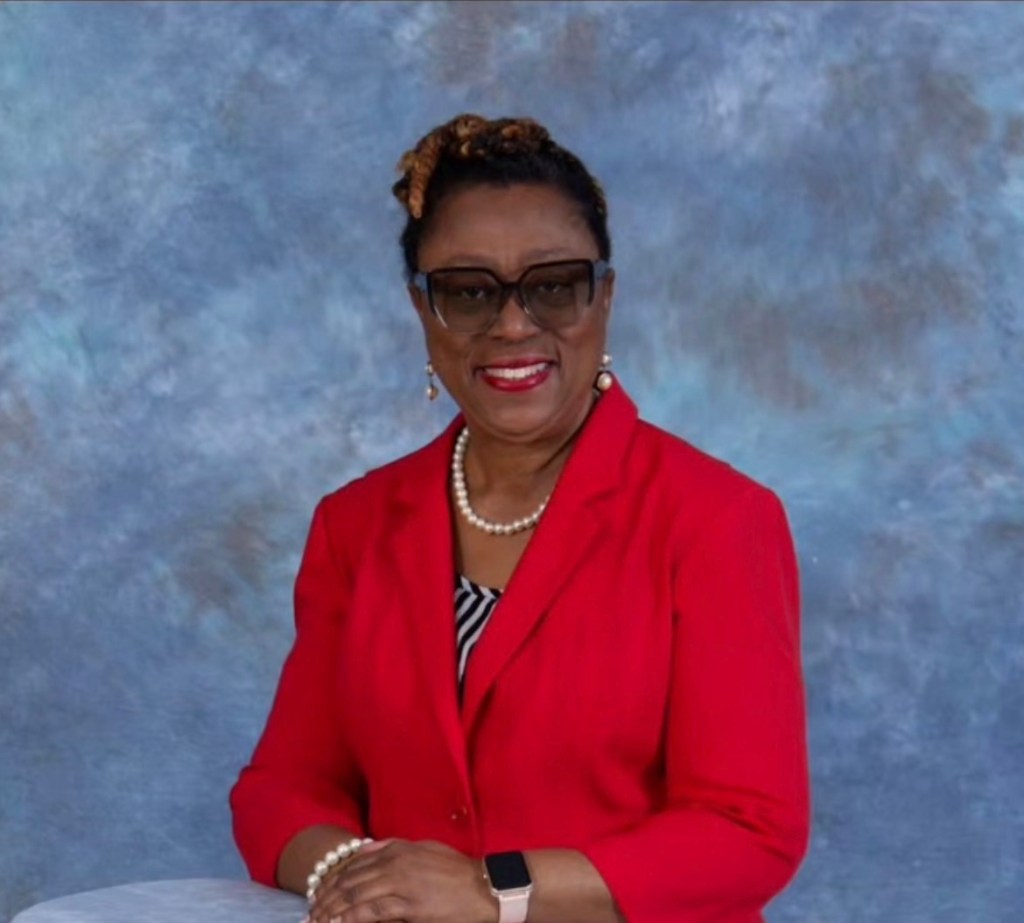
When I entered Naparima Girls’ High School in 1994, I arrived with a story already attached to me. I was a convent girl who had repeated CXC. I felt a little strange, a little unsure of where I fit. Naparima Girls has a way of absorbing you and in a good way but it was in Mrs Woodsley’s literature classroom that I learned how to think, how to speak and how to trust my own mind.
The respect and nurturing I received from her were things I would barely encounter later at university or even in the workplace. At the time, I did not fully understand how rare that kind of intellectual generosity was. She listened seriously. She made space. She allowed ideas to breathe. She treated a teenage girl’s thoughts as worthy of examination, not correction by default.
That foundation stayed with me long before I knew its value.
Literature, at its best, is not about memorising texts. It is about learning how to read the world.
Character analysis teaches you that people are never one thing. That behaviour has context. That past experiences shape present actions. When you learn to examine characters with care, you learn empathy without naivety and judgement without cruelty. You learn to listen before you conclude. In adult life, that skill translates into leadership, parenting, negotiation and the ability to hold space for complexity.
Plot teaches cause and effect. Actions are never isolated. Choices accumulate. Consequences unfold whether they are intended or not. Literature trains you to follow these threads patiently, to understand that nothing happens in a vacuum. That is strategy. That is ethics. That is foresight.
Foreshadowing teaches attentiveness. You learn to notice patterns, early signals, quiet warnings. You learn that what seems small or insignificant often matters deeply later on. In business, in relationships, in society, this is the difference between reacting too late and responding wisely.
Pathetic fallacy teaches emotional intelligence. It shows how environment shapes mood, how atmosphere carries meaning, how tone influences interpretation. It teaches you that context is never neutral. Anyone who understands branding, storytelling, leadership communication or even human connection is using this skill whether they know its literary name or not.
Conflict teaches us that tension is inevitable. Resolution teaches accountability. Ambiguity teaches humility.
These are not academic exercises. They are life skills.
After A Levels, I wanted to study psychology at UWI. The class was already full when I applied. I was told to choose either Literatures in English or History. By then, Mrs Woodsley had already done the work. She had made me love literature. I chose Literatures in English and never changed after the first year. I persisted, not because it was easy but because it aligned with how my mind worked.
At university, many of my lecturers tried to pull my interpretations back into their paradigms. They wanted conformity more than curiosity. But I always remembered the voice Mrs Woodsley had encouraged in me. The voice that trusted instinct. The voice that could argue thoughtfully. The voice that did not fear interpretation.
That voice took me to the Express Newspapers at nineteen, just a few months after I left Naps. While I studied, I was also crafting my skill as a journalist. Interviewing, observing, interpreting. Analysing people, institutions and power structures the same way I had analysed Chaucer and Shakespeare, Selvon and Achebe, Naipaul and Brontë, Walcott and Hardy, Morrison and so many others.
After journalism, I moved into corporate communications. There, literature taught me how to read organisations as texts. To understand character and motivation in leadership. To recognise subtext in messaging. To shape narratives with intention rather than spin.
From there, I went into radio news. Literature sharpened my sense of clarity, pacing and tone. It taught me how to distil complexity without distortion, how to respect an audience’s intelligence and how to understand the emotional weight behind facts.
I moved on to marketing and event management, where storytelling became central. Literature trained me to think in arcs, not moments. To build anticipation. To understand atmosphere. To recognise that people respond not just to information, but to meaning, mood, and memory. Character analysis became consumer analysis , a skill I was grafting since NAPS.
Then came sales in London, where many would least expect literature to matter. Yet it did. Literature teaches you to listen before you persuade. To understand the other person’s story. To recognise resistance as information, not rejection. To frame value in a way that resonates with human needs, not just product features.
Now, more than ever, I use literature in my brand, TTChatterbox.
TTChatterbox is built on the foundations laid for me years ago in Mrs. Woodsley’s classrooms. It is shaped by close reading, careful listening and respect for voice. Every brand story I tell is an act of literary analysis, whether the subject realises it or not.
I analyse character, not just credentials. Who is this entrepreneur, really? What shaped them? What do they believe? Where are the contradictions, the vulnerabilities, the quiet strengths?
I look at plot. How did this brand begin? What obstacles did it face? What moments changed its direction? What choices mattered most? No brand exists without narrative tension. No success story is linear.
I pay attention to foreshadowing. Early decisions. Small moments that hint at future growth or fracture. The details others overlook are often the ones that explain everything later.
I understand setting. Place matters. Culture matters. Environment matters. A brand in Trinidad and Tobago does not exist in abstraction. It exists within history, community, economy and identity. Atmosphere is never neutral.
Tone, pace and even silence matter. What is said. What is not said. What sits between the lines.
TTChatterbox works because it does not flatten stories into slogans. It allows complexity. It respects ambiguity. It trusts the reader. That approach did not come from marketing textbooks. It came from learning how to read deeply, think critically and honour interpretation.
When I sit across from an entrepreneur, a creative, or a corporate leader, I am doing the same work I once did with novels and plays. Listening. Interpreting. Contextualising. Making sense of the human story beneath the surface.
This is the long tail of great teaching and the study of English Literature. And it leads me, always, back to Mrs Woodsley.
At every stage, literature was with me. Not as theory but as practice.
What made Mrs Woodsley exceptional was not simply her mastery of the subject but her respect for the student mind. She understood that literature is not about arriving at a single conclusion, but about learning how to defend an idea thoughtfully, revise it when necessary and hold opposing perspectives without fear.
Decades later, I still call her Miss. I spoke to her just yesterday. Some forms of respect do not fade with time. They deepen.
When I look at her career at Naparima Girls, stretching across more than thirty years, I think about the scale of impact that can never be quantified. So many girls who were taught how to read closely. How to write clearly. How to articulate emotion. How to interpret the world rather than merely consume it.
Literature teachers rarely get credit for shaping leaders, strategists, creatives, communicators and thinkers. Yet they do. Quietly. Consistently. Patiently.
In a world that increasingly values speed over thought and reaction over reflection, the discipline of literature matters more than ever. It teaches us to slow down. To pay attention. To ask better questions. To understand that meaning is layered and truth is often complex.
Mrs Woodsley represents a generation of educators who understood that shaping minds mattered more than finishing syllabi. Who knew that teaching girls how to think was as important as teaching them what to think. Who recognised that being seen, truly seen, could change a life.
I am grateful to God for her. For what she gave to me. For what she gave to generations of Naparima Girls.
Thank you for being our teacher. Thank you for becoming our friend. Thank you for always listening. Thank you for making us feel seen.
Literature matters because it teaches us how to be human. And teachers like Mrs Naomi Adonis-Woodsley remind us why that will always matter.


