
In Trinidad and Tobago, early childhood education has long followed a familiar script. Structured classrooms. Standardised expectations. A system designed, often unintentionally, around a narrow definition of what development should look like.
For many children, it works.
For many others, it does not.
Across the country, there is a quiet, persistent gap. Parents searching for spaces that understand children who learn differently. Children who process differently. Children who do not fit neatly into traditional frameworks but are no less capable, no less deserving of support, attention, and care.
And it is within that gap a brands called KaleidoKids Learning Hub has emerged, not as an alternative but as a necessity.
At its core, KaleidoKids is an inclusive early childhood centre designed for both neurotypical children and those with additional needs. But to reduce it to a category would be to miss its significance. This is part of a broader shift in how education is being reimagined in Trinidad and Tobago, one that recognises that inclusion is not a feature, it is a foundation.
Because the reality is, inclusive education is still developing locally. While awareness around neurodiversity has grown, access to environments that are truly equipped to support that diversity remains limited. Many parents are left navigating systems that were never built with their children in mind, often forced to choose between adaptation and exclusion.
KaleidoKids enters this space with a different approach. Not by asking children to fit into the system, but by shaping the environment around them.
The name itself offers a window into that philosophy. Inspired by the kaleidoscope, it reflects colour, variation, individuality. Just as a kaleidoscope forms beauty from different pieces, KaleidoKids is built on the belief that every child brings their own pattern to the world. There is no single way to learn, no single way to be.
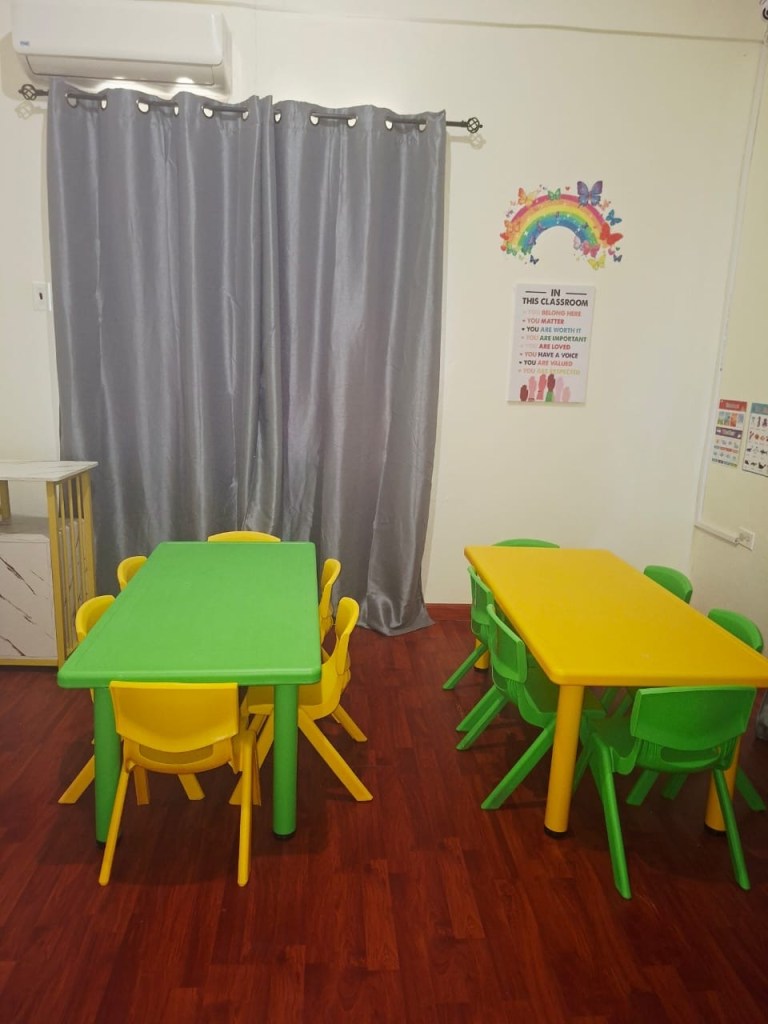
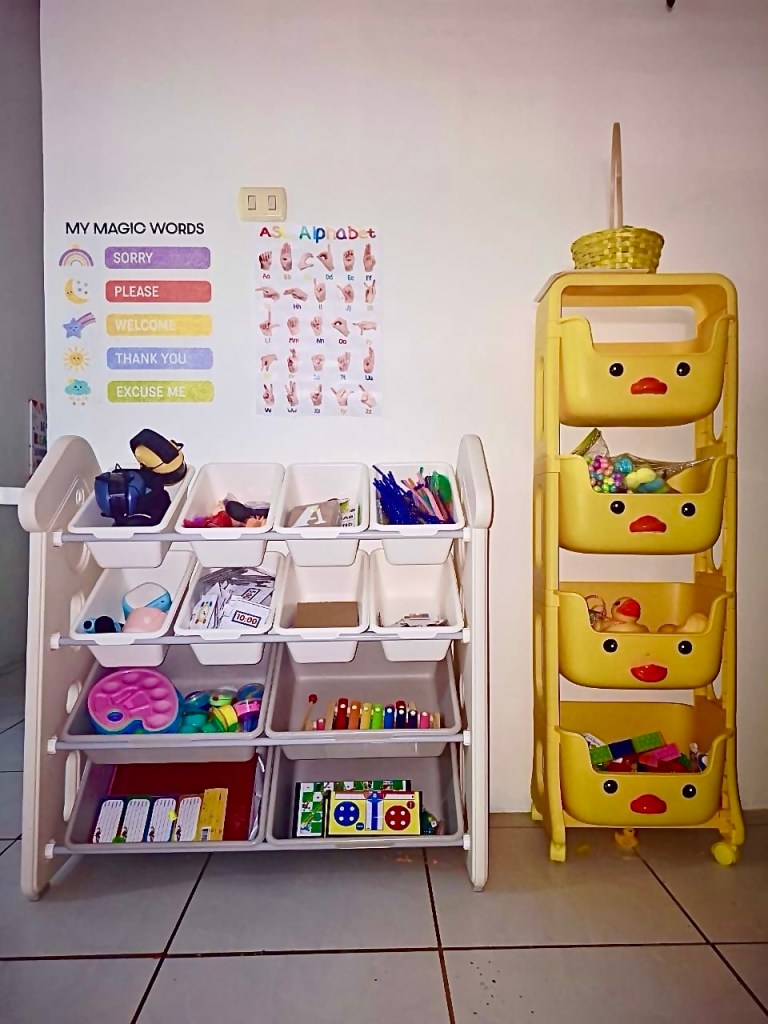
Inside the space, that belief is made tangible. Structured learning exists, but it is balanced with play-based exploration. Sensory support is not an afterthought, it is embedded into the environment. Classrooms are designed with intention, alongside spaces that allow children to regulate, reset, and engage in ways that feel natural to them.
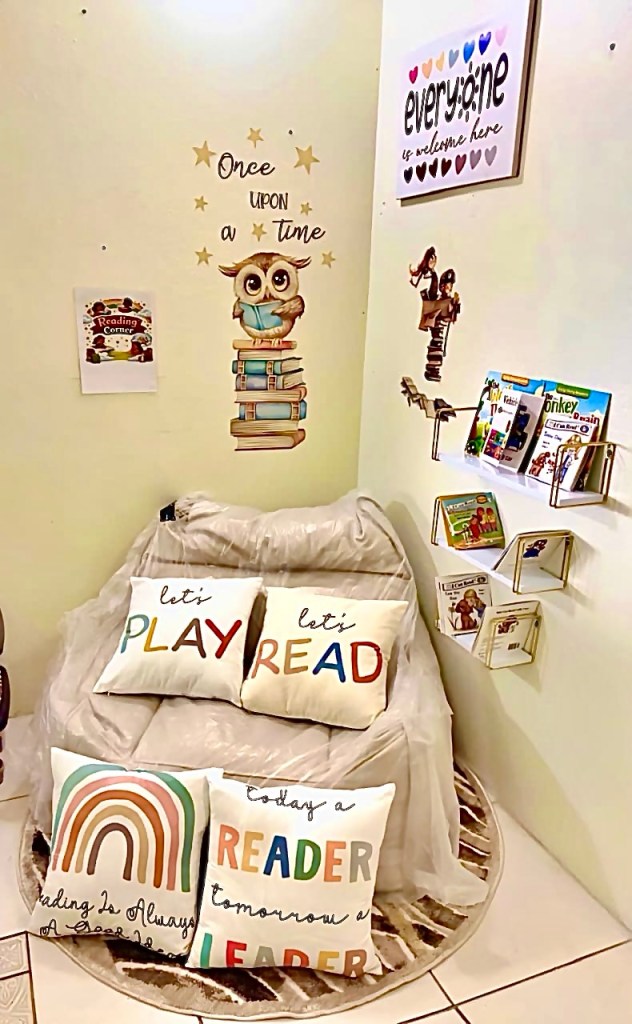
This is what modern early childhood education is beginning to look like globally. And increasingly, it is what parents in Trinidad and Tobago are seeking.
But what makes KaleidoKids resonate is not just its alignment with global thinking. It is the heart behind it.
The founder is building this from a place of deep personal conviction, shaped by recognising a very real need within the local landscape. A need for spaces where children are not simply accommodated, but genuinely understood. A need for environments where parents feel seen in their own journeys.
And she is building it while carrying a life that demands everything of her.
By day, she works as a technician at a methanol plant, a role that requires precision and discipline. At home, she is a mother guiding her 11-year-old through SEA preparation, one of the most defining academic milestones in the country. Alongside this, she manages a skincare brand. And within all of that, KaleidoKids continues to take shape.
It would be easy to call it overwhelming. She calls it purpose.
There is a clarity in how she speaks about it, an understanding that building something meaningful rarely comes at a convenient time. The vision for KaleidoKids has been with her since 2020. For years, it sat waiting. Until she made a decision that many entrepreneurs struggle to make, to move forward without perfect conditions.
To begin.
That decision has already led to tangible progress. The concept has been fully developed. The structure is in place. A learning environment is being carefully prepared, complete with specialised areas like a sensory room and thoughtfully designed classrooms. More importantly, connections are forming. Conversations with parents. Moments with children. Early signs that this is not just needed, it is welcomed.
And this is where KaleidoKids moves beyond being a business and steps fully into being a brand.
Because in a space like early childhood education, trust is everything. Parents are not simply purchasing a service. They are placing their children into someone else’s care, into someone else’s environment, into someone else’s philosophy.
A business can offer a programme.
A brand offers reassurance.
KaleidoKids understands this distinction. It is not being built around transactions, but around experience, connection, and the feeling parents carry when they walk through its doors.
Looking at the wider landscape, there is a noticeable shift happening within the local brand community. There is more intention. More awareness. More willingness to challenge traditional models and create something that reflects the realities of modern life in Trinidad and Tobago.
In that context, KaleidoKids is not just participating. It is contributing to a necessary evolution.
Because inclusive spaces do more than support individual children. They reshape how communities think about difference. They challenge stigma. They create environments where empathy is normalised from the earliest stages of life.
They change futures, not just for the children within them, but for the society around them.
For now, the focus remains on building that foundation. Strengthening the space. Ensuring every detail aligns with the vision. Plans for community events, workshops, and open house sessions are on the horizon, but there is no rush to scale before the core is right.
And that, in itself, says everything.
Because KaleidoKids is not trying to be loud.
It is trying to be lasting.
A place where children are not measured against a single standard, but supported in becoming who they already are.
A place where parents can exhale, knowing their child is understood.
A place that reflects a simple, but powerful truth.
That every child, in all their difference, belongs.


