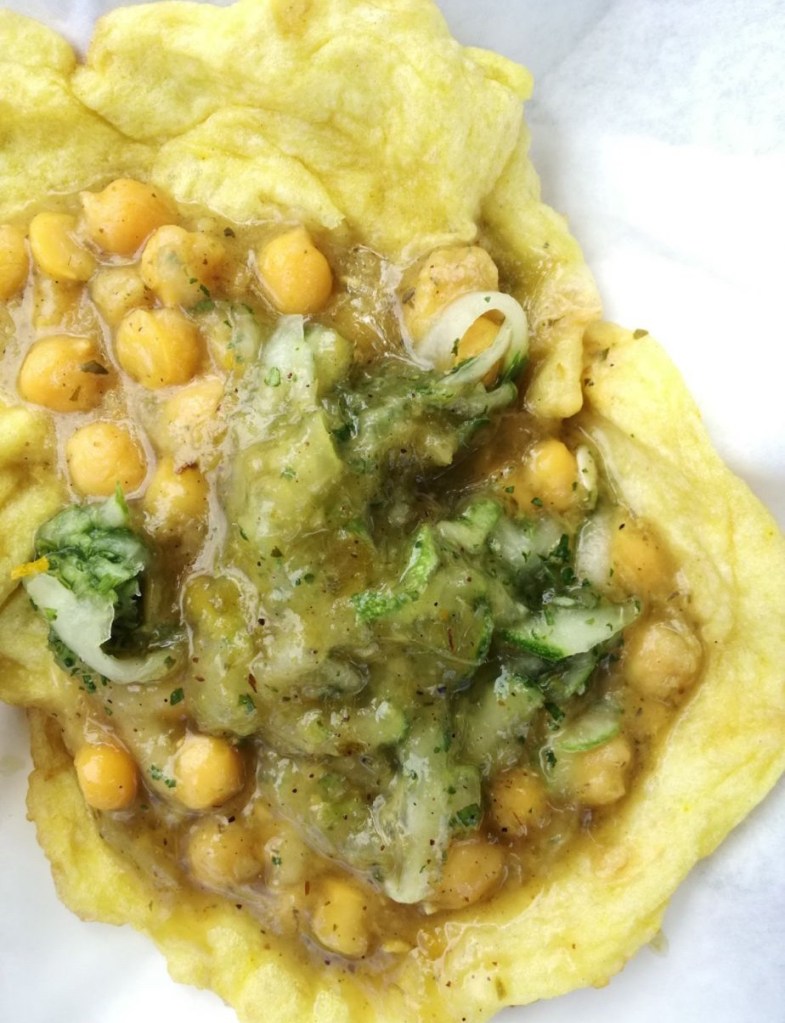
There are very few foods in Trinidad and Tobago that cut across everything. Class. Race. Religion. Geography. Time of day. Doubles is one of them. Maybe the clearest one.
By eight o’clock on any weekday morning, the island is already in motion. The sun has announced itself. Traffic is building. Shirts are already sweaty. And on corners and pavements around the country, doubles stands and carts are already alive. There are usually two lines. One for those eating right there on the spot. The other for those taking it away, folding food into the rhythm of the day.
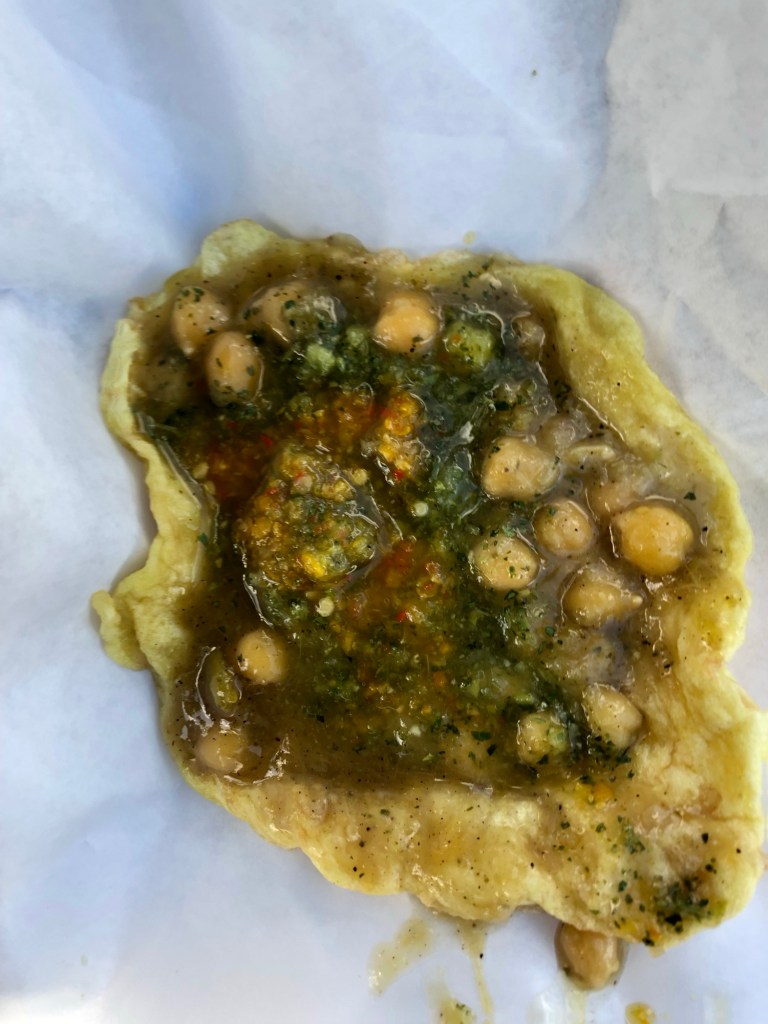
Doubles is not just something we eat. It is something we move around with. It exists between places. On the way to work. After a night out. Before school. Before life demands your full attention. Or just because. It is, quite simply, I’m my option, the number one food in Trinidad and Tobago.
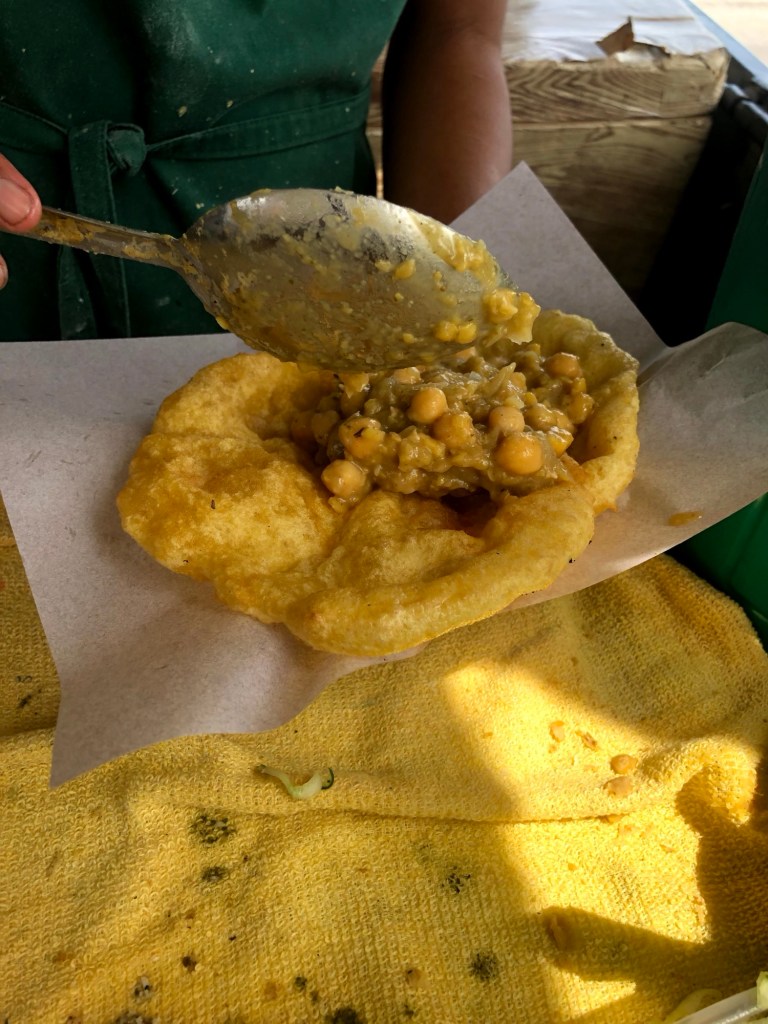
Some of my earliest memories of doubles are walking to get it with my Dad. Just the two of us. My mother would be waiting in the car, parked nearby, patient as always. I remember keeping pace with my father’s longer stride, already excited before we reached the stand. Standing close, watching the vendor move, the quick hands, the pot spoon dipping into channa, the paper being folded just so. Doubles wasn’t just breakfast. It was time together. It was a ritual. It was belonging.
My father used to call me “brown paper”. It was his joke and his nickname for me, because I always seemed to have doubles in my hand or on my mind. Long before I had language for food culture or storytelling or identity, doubles was comfort. Doubles was familiarity. Doubles was something that made me feel happy.
I remember sneaking out of school many times to buy doubles. The small rebellion of it. Uniform on. Heart racing just enough. Knowing I would have to explain myself later but deciding it was worth it anyway. Standing there with my doubles warm in my hand, choosing it over the classroom for a few stolen minutes. It felt like freedom. It felt like life happening just outside the rules. The best part, I never got caught.
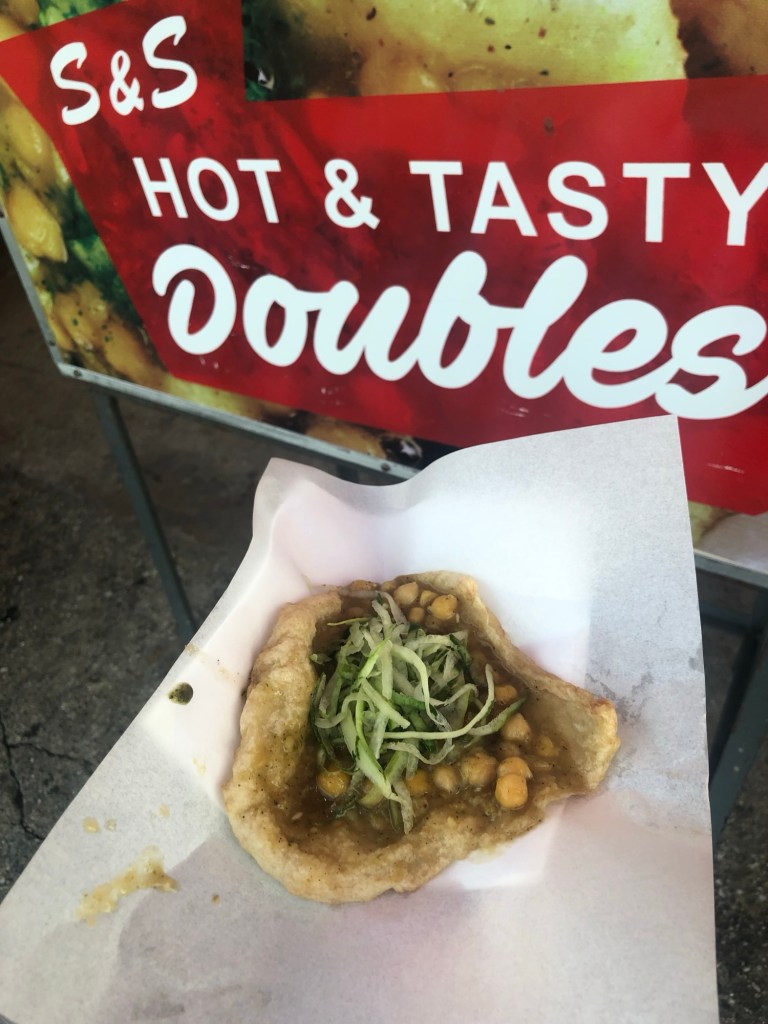
Doubles was always close to me. When I think about it now, that proximity matters. It wasn’t something I had to seek out. It was always there. Close to my primary school and secondary school. Then even more so when I went to school in Penal, where my relationship with doubles deepened in a real way. And later, when I moved on to another school back in San Fernando, there was a doubles lady who would come in at recess. Doubles showed up where I was. No journey required. No planning. It became my go-to, not because it was indulgent, but because it was accessible. Reliable. Familiar. Doubles wasn’t an event in my life. It was a constant.
That sense of proximity extended into my family life too. One of my grandmothers lived on Harris Street in San Fernando, home of Ali’s Doubles. My other grandmother lived on Hubert Rance Street in Vistabella and there was an Ali’s Doubles on that street as well. Think about that for a moment. Doubles didn’t just follow me to school. It lived where my grandmothers lived. It existed in the spaces where I spent time, where I was cared for, where family life unfolded. When I say doubles was always close to me, I mean it literally. It was woven into my routes, my routines, my relationships. It wasn’t something special I went out of my way to get. It was simply there, part of the landscape of my life.
That’s how early doubles teaches you something. Food is never just sustenance. It’s memory. It’s emotion. It marks moments.
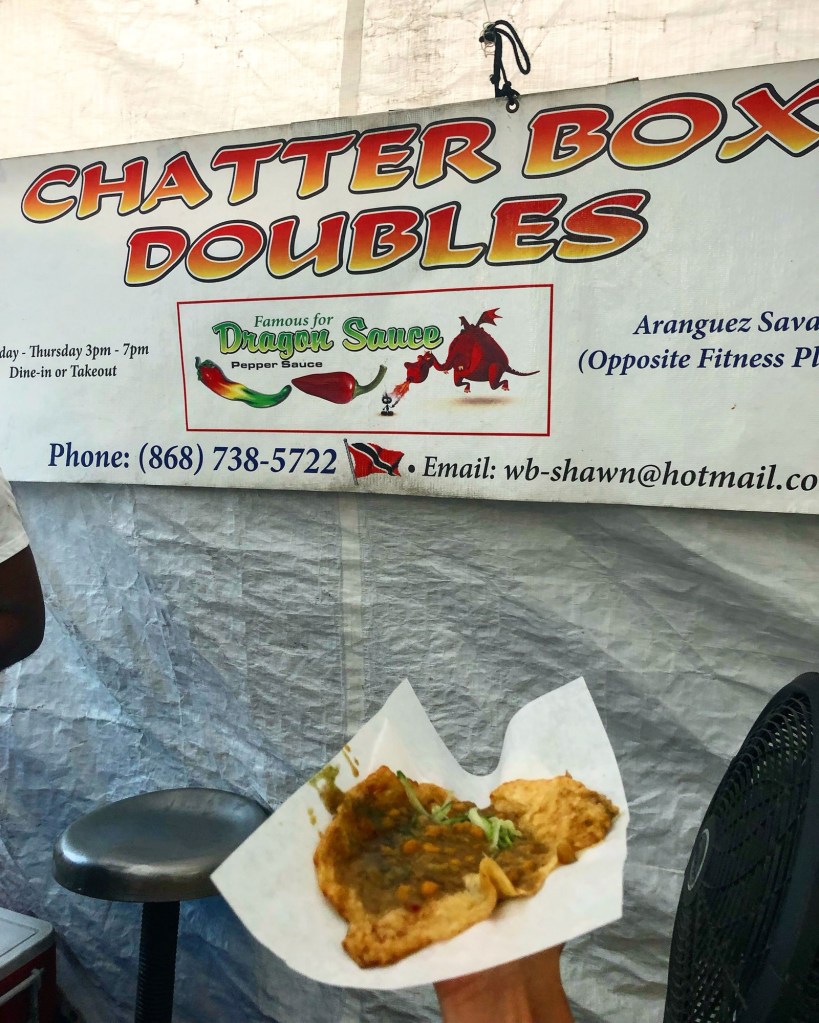
You can find doubles everywhere. On corners in Port of Spain. Along Ariapita Avenue late at night when the bars empty out and hunger returns. In Curepe. In San Fernando. I’ve had doubles in Moruga, Toco, Cumuto, Icacos, St Augustine, Piarco and more. In South Trinidad, it is alleged that Debe has earned its reputation as the doubles capital of the world. Every area has its favourite stand. Every Trini has an opinion. Slight pepper. Plenty pepper. No pepper today. Everything slight, my go-to.
What makes doubles a masterpiece is how ordinary it is. And that’s what makes it’s extraordinary.
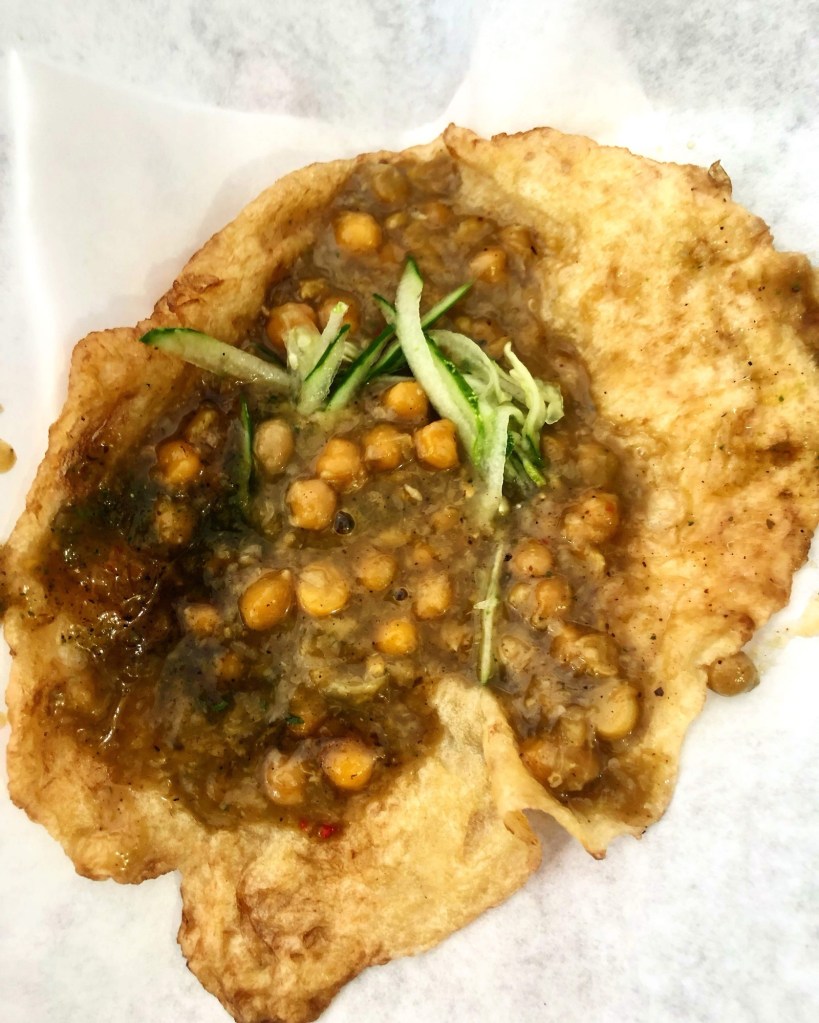
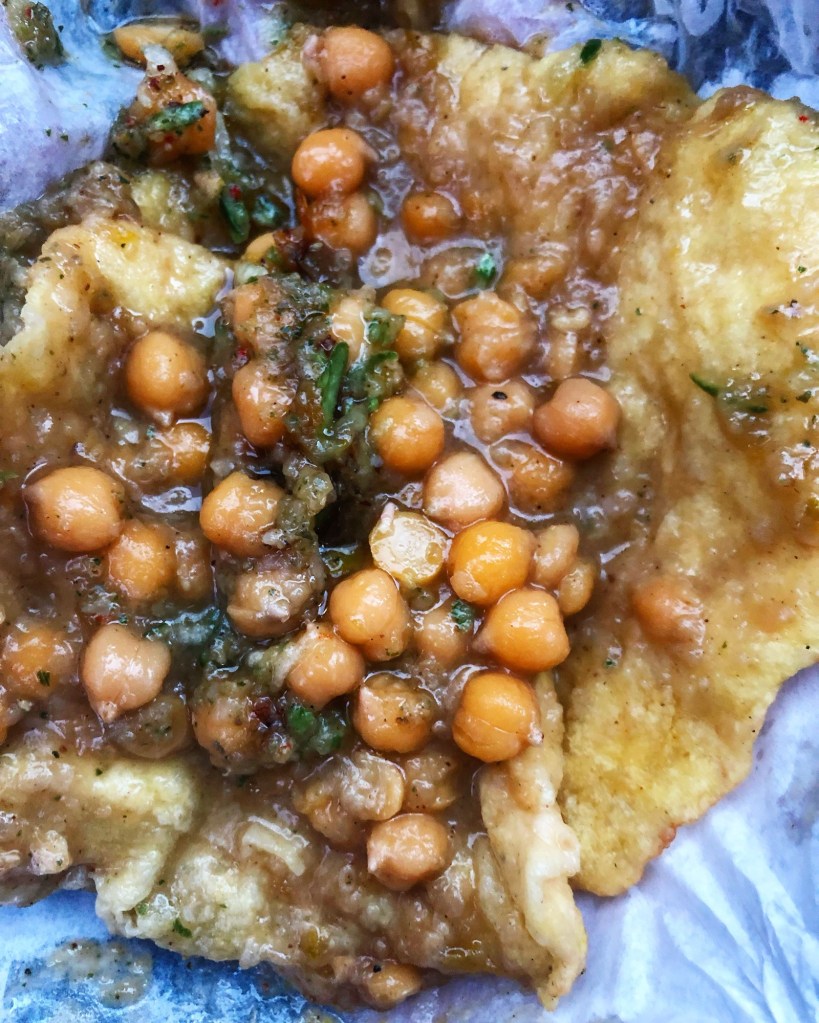
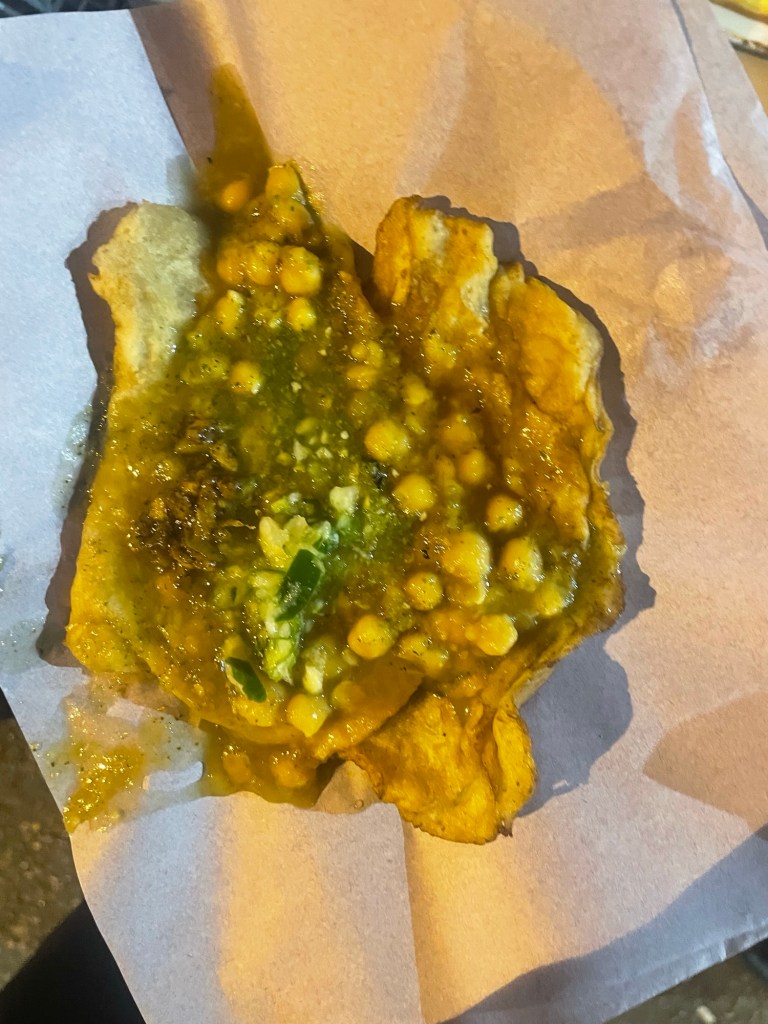
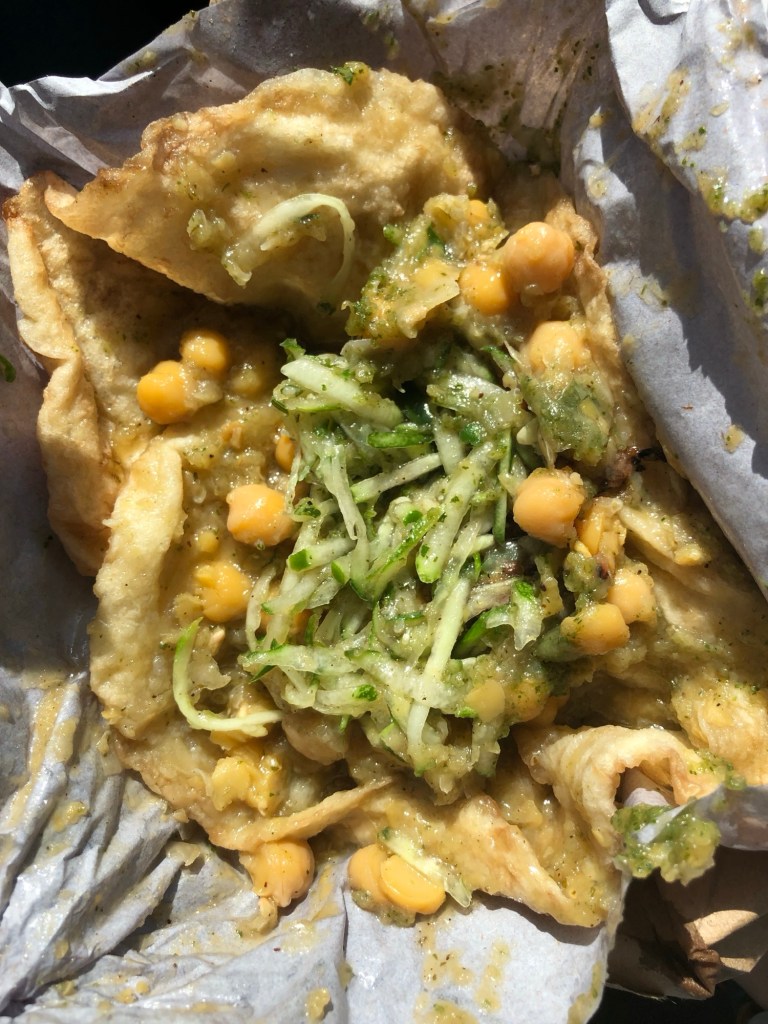
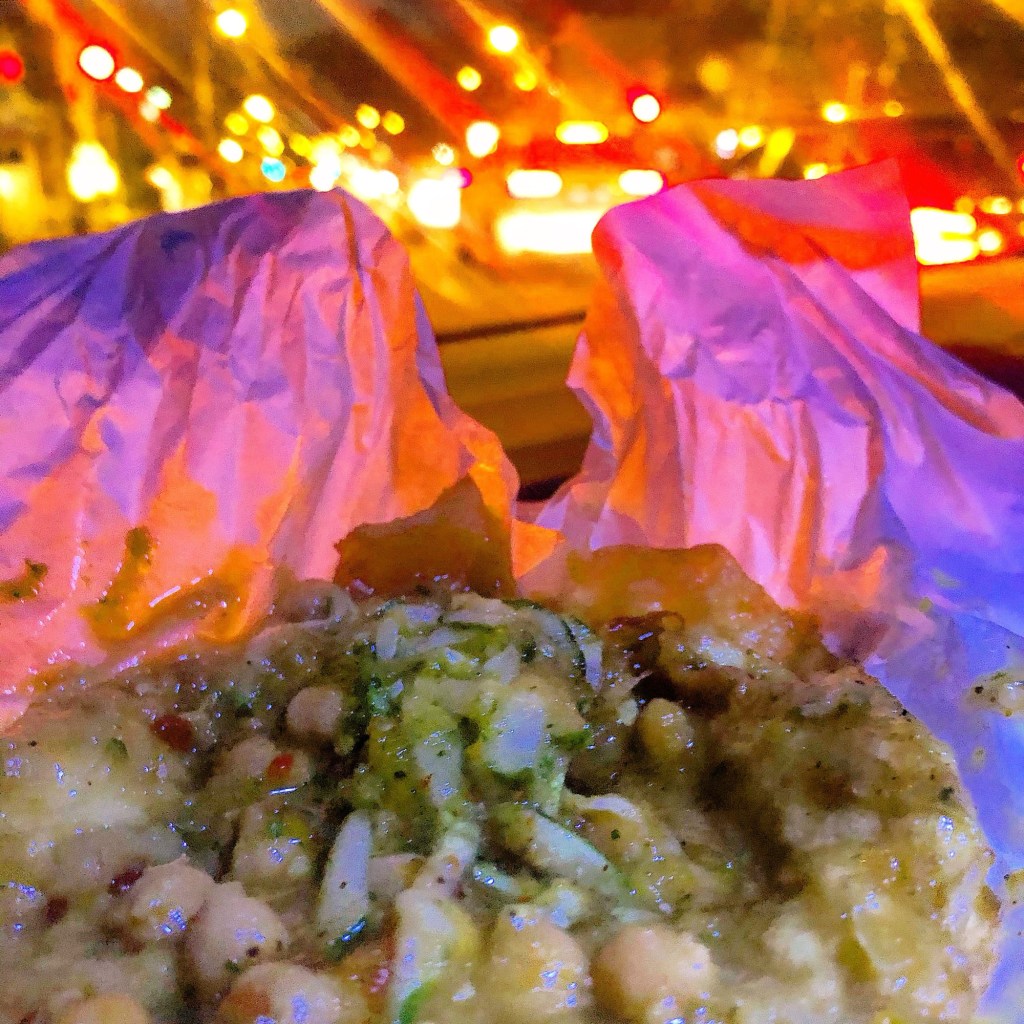
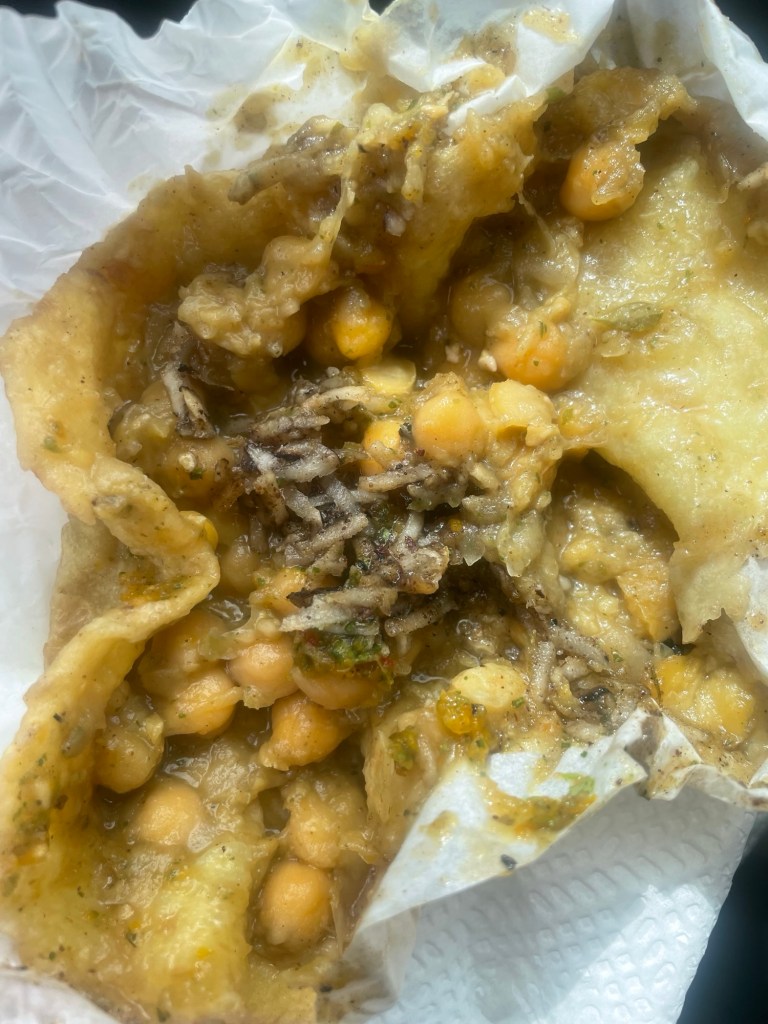
At its core, it is two pieces of fried bara, soft and yielding, folded around channa simmered slowly with and finished with a combination of sauces that vary slightly from vendor to vendor. Many say the channa is curried but it is not. The channa in doubles begins with chickpeas that are pre-soaked and boiled until tender, then gently simmered with garlic, geera (cumin), turmeric and other aromatics to build flavour. As the pot cooks, some of the chickpeas are lightly crushed to thicken the liquid and create that soft, saucy consistency that soaks beautifully into the bara. Pimento peppers, hot pepper and fresh chadon beni are often added toward the end for fragrance and heat, while salt and spices are adjusted until the balance feels just right. The result is a rich, earthy pot of channa that is hearty, fragrant and perfectly textured to be spooned over the warm fried bara before the tamarind, pepper sauce and kuchela go on top. Then there is the array of condiments to be added. Tamarind. Pepper. Cucumber. Kuchela. Chadon beni. Roasted coconut. Roast Pepper. Sweet sauce. It is wrapped because it was never meant to be eaten sitting down. Doubles was designed for people who were already on the move.
The name itself tells you everything you need to know. Doubles comes from the act of doubling. Two bara instead of one. You didn’t order a dish with a poetic name. You ordered a quantity. Over time, the description became the thing. Doubles stopped being a number and became a noun. Singular. Definitive.
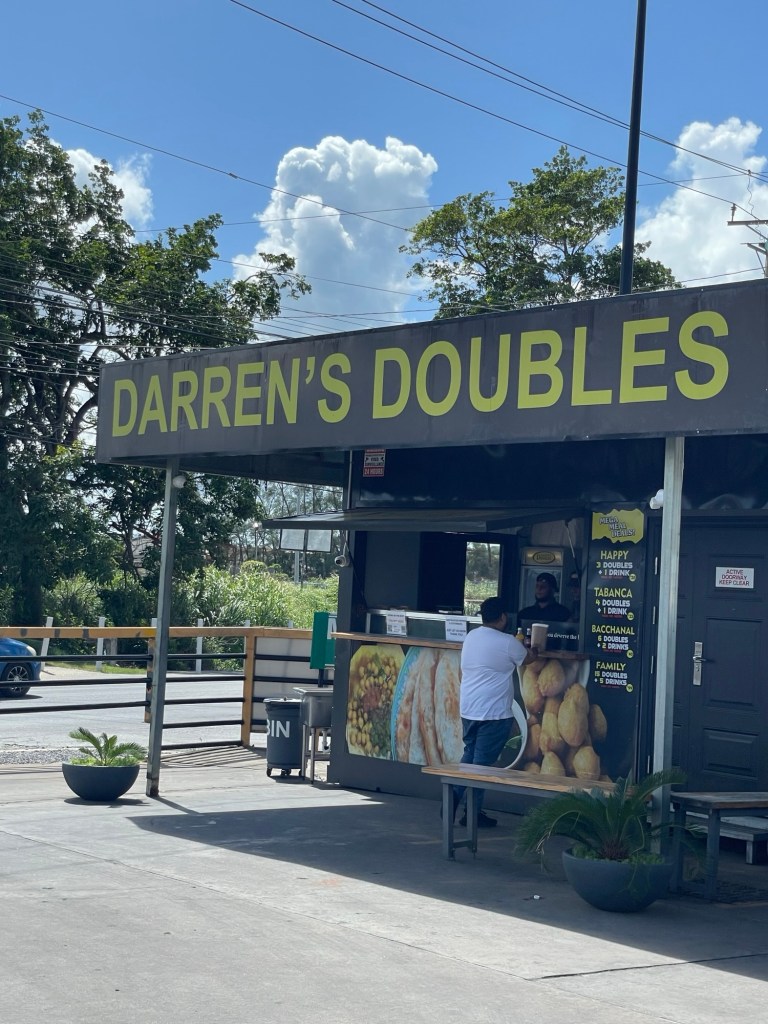
And yet, even within that definition, doubles continues to evolve quietly. These days, you can ask for a singles, one bara with channa, usually chosen by people eating right there on the spot. Less paper. Less travel. Still satisfying. There is also the trebles, three baras folded together, for when hunger is serious or the day ahead feels long. No one explains these options. You just know. Singles for now. Doubles for movement. Trebles for endurance.
Sometimes you skip the bara altogether. You order a cup of channa, ladled hot and generous, finished with the same condiments. Tamarind. Pepper. Kuchela. Chadon beni. Cucumber. Same comfort. Same flavour. Less carbs. Chosen by people who still want the feeling of doubles without the bara. Doubles doesn’t insist on one form. It offers choice without ceremony. I am not a fan. The bara is a must.
Its roots are Indo-Trinidadian, shaped by migration, adaptation and necessity. Indian indentured labourers brought with them a food memory built around channa, fried breads and spice. What they did not bring were the same ingredients or the same conditions. What emerged here was something new, shaped by climate, availability and the relentless demands of labour.
The most widely accepted origin story places doubles in Princes Town in the 1930s, credited to Emamool “Mamoo” Deen and his wife Raheman Rasulan Deen. They sold curried channa on fried bara to estate workers and passersby. Customers began asking for an extra bara because one simply was not enough. A double. The name stuck.
That detail matters because it tells you exactly what doubles is. Problem solving.
One bara would soak through. One bara would tear. One bara could not always hold the filling properly, especially when you were eating quickly, standing up, moving. Two gave structure. Two made it portable. Two made it satisfying. Doubles was built for labour.
That is why doubles became breakfast. But it never stayed there.
Breakfast before work. Breakfast before school. Breakfast for people who needed something hot, filling, affordable and fast. And then doubles followed people into the night. Into limes. Fetes. Weddings. Into late hours. Into wherever hunger showed up unexpectedly. Doubles understands the body, the day and the moment.
A doubles vendor is never just a vendor. They are part of the neighbourhood infrastructure. They know families. They know your usual. They know when something is off. They remember you from before you could even buy your own doubles. Many have served generations, watching children grow up, relationships form, lives change, all anchored by the same ritual.
I once wrote a short story about a Monday morning at a doubles stand where there were usual two lines, eat here or on the spot, where the vendor had been set up since six and might sell out by eight. Where regulars weren’t just customers but people he’d known since they were in their mother’s belly. Where pregnancies were announced over channa and bara. Where life unfolded while breakfast was being eaten standing up. And I soon realised that it wasn’t fiction. That was Trinidad and Tobago.
Doubles is also language.
No pepper.
Slight pepper.
Heavy pepper.
Extra kuchela.
Little tamarind.
No cucumber today.
Sweet sauce.
Not too much sauce with the channa.
Extra channa.
Eating here.
To go.
A doubles stand is where news travels. Who pregnant. Who sick. Who gone foreign. Who get ah work. Who mash up their relationship. Who mother in de hospital. Doubles is nourishment and news, served hot.
The thing about doubles is that it belongs to everybody.
Every creed and race. Every class. Every kind of morning. Every kind of evening. And all the time in between. It is one of the few foods in Trinidad and Tobago that collapses social boundaries completely. Schoolchildren and suit-and-tie professionals stand in the same line. Someone coming off night shift and someone heading into a boardroom eat the same thing, ordered the same way.
And doubles does not stop at the shoreline.
Wherever Trinidadians have gone, doubles has followed. In Brooklyn and Queens. In South Florida. In Toronto. In Dubai.In London. In backyards, at pop-ups, at festivals, in small shops that kinda smell like home. The setup may change. The weather definitely does. But the rules remain the same. Two baras. Channa. Sauce. Hands. Movement. And while the quality will never be like home, the diaspora need their doubles and they take what they can get or learn to make them.
Doubles abroad is not about perfection. People will always say it is not quite the same. And that’s the point. Doubles outside Trinidad is connection, not replacement. A reminder of where mornings once began and how food has always been the fastest way home.
Here’s what makes me smile though. Doubles isn’t only “found” abroad in little pockets, it has been named, explained, written about, filmed, reviewed, posted, debated. In Brooklyn, doubles has become a whole destination on its own, the kind of street food people travel across boroughs for. In South Florida, doubles shows up as a real menu item, not a secret handshake, with several spots and even tourism listings calling out where to get a proper doubles fix. In the UK, doubles has gotten so mainstream it even appears as “Trini Doubles” on a major restaurant chain’s menu explainer, which is wild when you really think about it.
And the world has noticed doubles in print, not just on social media.
National Geographic has literally had doubles in a “world’s best street food” style list, describing it as a Trinidad and Tobago grab-and-go standout. Food & Wine has a full piece calling doubles a Trinidadian street food people should know, describing the flavours and the messiness and pointing to where it shows up in the US diaspora, including Brooklyn spots that have become doubles landmarks. Eater has done doubles content as part of its food video and cheap eats coverage in New York, framing it as a must-try Trinidadian “sandwich” and taking viewers inside the places that make it.
Even the BBC conversation happened, the kind of thing that reminds you how protective we are of our food, because Trinidadians were defending doubles fiercely after a BBC doubles post sparked comments online and local media wrote about the backlash and the pride.
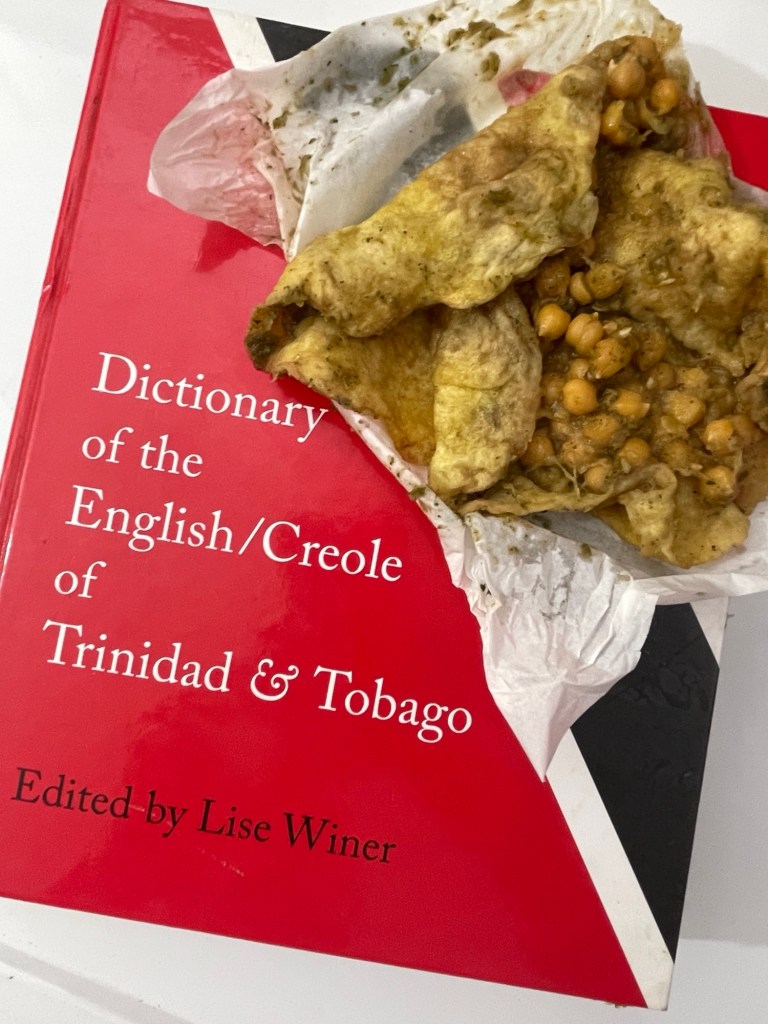
Doubles has been documented too. In dictionaries. In essays. In global publications that have tried to explain it, photograph it, contextualise it. Linguist Lise Winer defines doubles plainly as two bara breads with wet curried channa filling. The dictionary records the word. Trinidad and Tobago remembers the feeling.
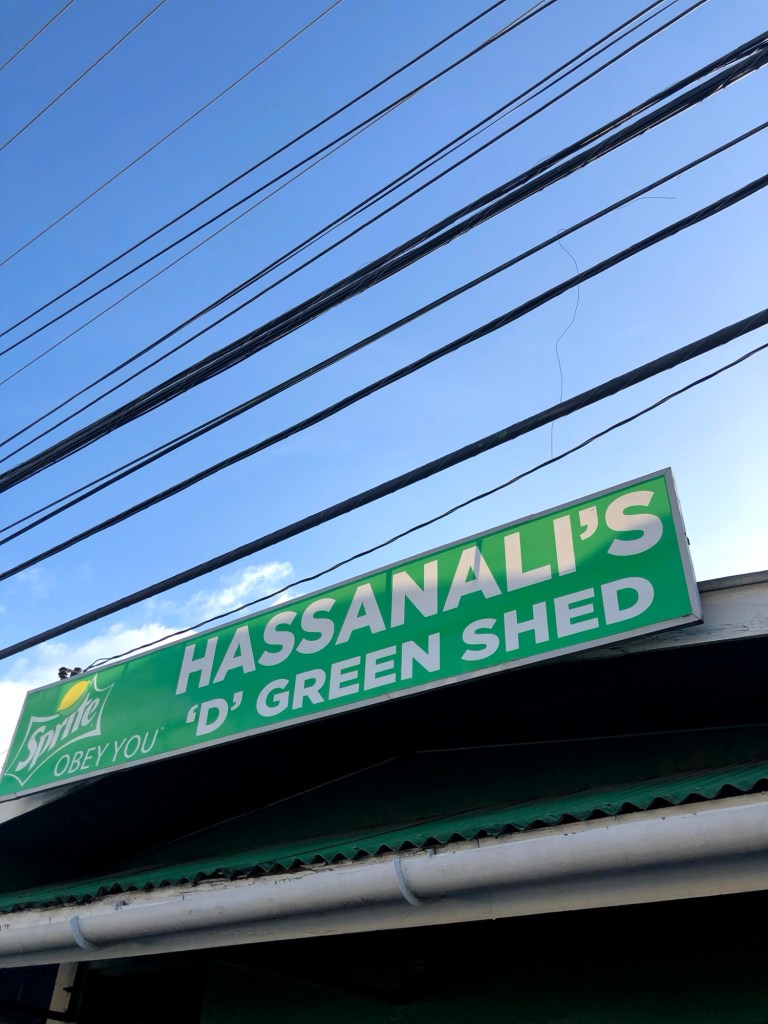
But no publication can capture what it feels like to be a little girl walking with her Dad to get doubles while her mother waits in the car. Or sneaking out of school for it. Or realising later that doubles was never close by accident. It was close because it belonged there and so did I.
Doubles has not been elevated because it does not need elevation. It has endured because it was built correctly from the start. Built for labour. Built for movement. Built for real life. Built for people.
This is Doubles.
This is memory.
This is proximity.
This is language.
This is culture.
This is our story.
The food that made us.